
Education
how to print a report card in powerschool

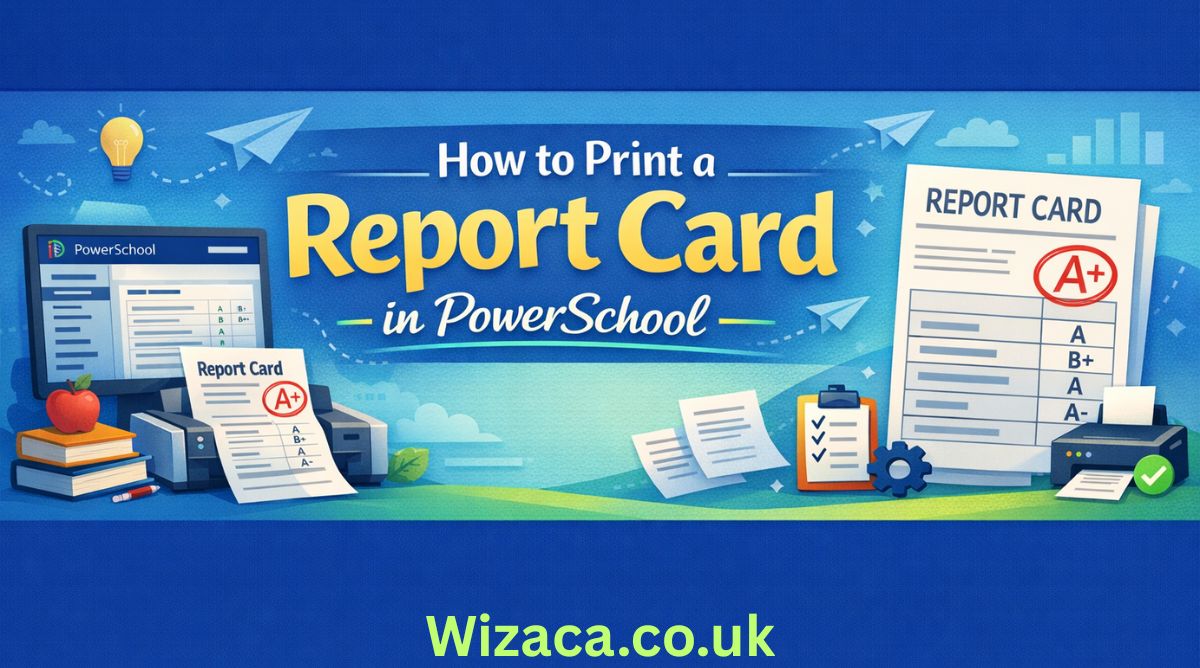
How to print a report card in PowerSchool is a common question among teachers, school administrators, and office staff who use the PowerSchool student information system to manage academic records. PowerSchool is widely used in K–12 schools to track attendance, grades, schedules, and student performance data. Because report cards are official academic documents, understanding the correct process to generate and print them is essential for accuracy and professionalism.
The PowerSchool platform provides multiple methods for printing report cards depending on user roles, school configuration, and district customization. Some schools use built-in report card templates, while others rely on custom object reports or district-designed forms. Regardless of setup, the general process involves verifying grades, selecting the appropriate term, generating the report, and printing or exporting it in the correct format.
Understanding User Roles and Permissions
Before attempting to print report cards, it is important to understand user permissions within PowerSchool. Access to report card printing is typically limited to teachers, administrative staff, counselors, and registrars. Students and parents may view report cards through portals, but printing official copies is usually restricted.
Administrators often configure access through security groups. If the report card option is not visible in your dashboard, you may need to request access from your system administrator. Without proper permissions, the reporting menu may not display printing tools.
Ensuring that you have the correct access level prevents delays during grading periods when time-sensitive printing is required.
Preparing Grades Before Printing
A critical step in how to print a report card in PowerSchool is confirming that all grades are finalized. Teachers must complete grade entry for the selected reporting term. This includes term grades, comment codes, citizenship marks, and attendance data if applicable.
Before generating report cards, verify that grades have been stored. In PowerSchool, grades are often entered in the teacher gradebook and then stored at the end of the term. If grades are not stored, the report card may show blank or outdated information.
Administrators may run verification reports to check for missing grades, incomplete comments, or data errors. Reviewing this information beforehand ensures accurate report cards.
Selecting the Correct Reporting Term
PowerSchool organizes academic performance by reporting terms such as quarters, trimesters, or semesters. When printing report cards, selecting the correct term is essential.
Navigate to the reporting or system reports section of the PowerSchool admin portal. From there, choose the appropriate reporting term from the dropdown menu. Many districts label terms clearly, such as Q1, Q2, Semester 1, or Final Year.
Printing from the wrong term can lead to confusion or distribution of incorrect academic information.
Accessing the Report Card Template
Most schools configure a standardized report card template within PowerSchool. These templates are customized to include school branding, grading scales, teacher comments, GPA calculations, and attendance summaries.
To begin printing, go to the system reports section and locate the report card option. Some schools label it simply as Report Card, while others may have customized names like Elementary Report Card or Secondary Term Report.
After selecting the report card template, you will typically see options to filter by grade level, homeroom, teacher, or individual student.
Printing Report Cards for Individual Students
If you need to print a report card for one student, begin by searching for the student using the search bar. Once inside the student record, navigate to the print reports section.
Select the report card template and confirm the reporting term. Some systems allow previewing the document before printing. Reviewing the preview helps confirm correct formatting, accurate grades, and proper student details.
After confirming the information, select print. Depending on system settings, the report may open as a PDF file, allowing you to print directly from your browser.
Printing individual report cards is useful for transfer students, corrections, or parent requests outside regular distribution periods.
Printing Report Cards in Bulk
During grading periods, schools often print report cards for entire grade levels or the full student population. Bulk printing saves time and ensures consistent formatting.
From the admin homepage, select a group of students. This can be done by grade level, homeroom, or all students enrolled. After selecting the group, access the system reports menu and choose the report card template.
Confirm the reporting term and adjust any print settings. Some schools print double-sided copies, while others print single-sided. The system may generate a large PDF file containing all report cards in sequence.
Before sending the document to the printer, it is advisable to review a sample page to ensure formatting is correct.
Using Object Reports and Custom Reports
Some districts use object reports instead of traditional system reports. Object reports allow more customization and dynamic data selection.
To print report cards using object reports, navigate to the object report section. Choose the student data set and select the appropriate report card form.
Object reports may include advanced formatting options, calculated fields, or conditional comment sections. While more flexible, they require proper configuration by system administrators.
If your school uses custom report card designs, consult your district documentation for specific steps.
Exporting Report Cards as PDF Files
In many cases, PowerSchool generates report cards as PDF files. This allows easy electronic distribution, archiving, and printing.
After selecting the report card template and running the report, the system may provide an option to download the file. Save the file securely, especially if it contains confidential student information.
Ensure that PDF files are stored in secure folders with restricted access. Student records are protected under privacy regulations, so handling documents responsibly is essential.
Printing from the Teacher Portal
Teachers may also print report cards directly from their PowerSchool teacher portal, depending on district configuration.
After logging into the teacher portal, navigate to the reporting section. Select the reporting term and locate the print report card option. This feature is often available after grades are stored.
Some districts restrict bulk printing to administrators, allowing teachers to print only for their assigned classes.
Troubleshooting Common Issues
When learning how to print a report card in PowerSchool, it is helpful to understand common challenges. One frequent issue is missing grades. This typically occurs when grades were not stored before printing.
Another issue involves formatting errors. If text appears misaligned or cut off, the template may require adjustment. Contact your district’s PowerSchool administrator for template corrections.
If the report card does not generate, verify your browser compatibility. Clearing cache or switching browsers sometimes resolves display issues.
Printer settings can also affect output quality. Ensure paper size matches the template configuration, typically standard letter size.
Verifying Report Card Accuracy
Before distributing report cards, conduct a quality check. Confirm student names, ID numbers, grade levels, and teacher assignments are correct.
Check GPA calculations, attendance totals, and comment sections for completeness. Errors on official report cards can cause confusion and require reprints.
Some schools designate administrative staff to perform final reviews before sealing and distributing printed copies.
Distributing Printed Report Cards
Once printed, report cards may be mailed home, distributed during parent conferences, or sent with students. Follow your school’s established distribution procedures.
Ensure confidentiality during handling. Avoid leaving printed stacks unattended in common areas. Secure storage protects student privacy.
If mailing report cards, verify mailing addresses in the system to prevent delivery errors.
Digital Report Cards and Parent Portals
Although this article focuses on printing, many schools also provide digital access through parent and student portals. Families can log in to view report cards electronically.
Digital distribution reduces paper use and allows immediate access. However, printed copies remain necessary for official documentation, transfers, or parent requests.
Balancing digital and printed options supports accessibility and convenience.
Maintaining Records for Compliance
Schools are required to maintain academic records for specific periods. Printed report cards may be archived in cumulative folders, while digital copies remain stored in the system.
Proper recordkeeping ensures compliance with educational regulations and district policies.
Administrators should establish consistent procedures for archiving report cards after each reporting term.
Best Practices for Efficient Printing
Plan report card printing schedules in advance. Avoid waiting until the last minute, especially during busy grading periods.
Test the template with a small sample group before running large batches. This helps identify formatting issues early.
Coordinate with IT staff if large PDF files strain system performance. Printing during off-peak hours may improve speed.
Ensure printers are stocked with paper and toner to prevent interruptions.
Final Thoughts
Understanding how to print a report card in PowerSchool is an essential skill for educators and administrative staff. From verifying stored grades to selecting the correct reporting term and using the appropriate template, each step contributes to accurate academic documentation.
By preparing data carefully, confirming permissions, reviewing output quality, and following secure distribution practices, schools can ensure professional and reliable report card printing. Whether printing for individual students or entire grade levels, mastering this process supports clear communication between schools and families while maintaining academic integrity.

The journeyman plumber test is a critical step in the professional journey of a plumber. It serves as a gateway for apprentices to transition into fully licensed, skilled plumbers who can work independently on a wide variety of plumbing projects. Many aspiring plumbers ask, “How hard is the journeyman plumber test?” Understanding the structure, content, preparation strategies, and real-world implications of the test can provide clarity for those aiming to pass it. The test is challenging but manageable with proper preparation, hands-on experience, and a clear understanding of plumbing principles, codes, and problem-solving techniques.
understanding the journeyman plumber test
The journeyman plumber test is designed to assess a candidate’s technical knowledge, practical skills, and ability to apply plumbing codes safely and effectively. The test typically has two main components: a written examination and a practical evaluation. Both parts are crucial, and candidates must demonstrate competency in a broad range of plumbing topics.
written examination
The written portion of the journeyman plumber test evaluates a candidate’s knowledge of plumbing theory, regulations, and technical standards. Questions may cover topics such as pipe sizing, water supply systems, drainage, venting, safety protocols, and local plumbing codes. Many tests include multiple-choice questions, true/false items, and problem-solving scenarios.
The difficulty of the written exam depends on the candidate’s preparation, understanding of plumbing theory, and familiarity with local plumbing codes. It requires not only memorization of technical details but also the ability to apply knowledge in practical scenarios. Time management is also essential, as candidates must complete the exam within a set period.
practical evaluation
The practical component tests a candidate’s ability to perform hands-on plumbing tasks. This evaluation may include installing pipes, fitting fixtures, soldering, cutting, threading, and troubleshooting plumbing systems. Practical tests are designed to simulate real-world work conditions and assess a candidate’s competency, precision, and adherence to safety standards.
The practical portion is often considered more challenging by candidates because it requires dexterity, problem-solving under pressure, and attention to detail. Mistakes during the practical test can result in penalties, emphasizing the importance of both skill and confidence.
factors affecting difficulty
Several factors influence how hard the journeyman plumber test is for individual candidates. These factors include educational background, hands-on experience, study habits, and familiarity with local plumbing codes.
education and training
Candidates with formal apprenticeship training or technical school experience tend to find the test more manageable. Structured education provides both theoretical knowledge and practical skills, creating a strong foundation for the examination.
hands-on experience
Experience gained through on-the-job training is critical. The more exposure candidates have to real-world plumbing systems, the more comfortable they are with practical tasks and problem-solving scenarios. Hands-on experience allows candidates to internalize safety procedures, recognize potential issues, and develop efficient techniques.
preparation and study
Effective preparation significantly reduces the difficulty of the journeyman plumber test. Study materials, practice exams, and codebooks are essential tools. Candidates who actively review technical topics, practice calculations, and understand local plumbing codes are better equipped to tackle both written and practical components.
familiarity with local codes
Plumbing codes can vary by state, county, or municipality. A deep understanding of these codes is crucial because many test questions are based on compliance standards. Candidates who are familiar with local regulations have a clear advantage.
tips for passing the journeyman plumber test
Passing the journeyman plumber test requires a combination of preparation, practice, and strategic study. Here are several tips to improve the likelihood of success.
create a study plan
A structured study plan helps candidates cover all necessary topics efficiently. Divide study sessions into theory, practical skills, and code review. Allocate more time to areas of weakness while maintaining a balance across all subject areas.
practice problem-solving
Many questions on the written exam involve applying knowledge to real-world problems. Practice solving technical problems, performing calculations for pipe sizing, and understanding water flow and pressure dynamics. Practice exams can simulate test conditions and improve familiarity with question formats.
develop hands-on skills
For the practical portion, hands-on practice is essential. Simulate real plumbing tasks, such as installing pipes, soldering, and troubleshooting systems. Practicing under timed conditions can improve speed and accuracy while building confidence.
study local plumbing codes
Understanding local plumbing codes is non-negotiable. Review codebooks, attend workshops, or consult with experienced plumbers to ensure thorough comprehension. Many jurisdictions emphasize code compliance in both the written and practical components.
focus on safety
Safety procedures are a significant aspect of the test. Demonstrating proper safety techniques in both written answers and practical tasks can improve scores and reduce the risk of mistakes. This includes correct use of personal protective equipment, safe handling of tools, and adherence to industry-standard safety protocols.
real-world perspective on difficulty
While many candidates perceive the journeyman plumber test as difficult, it is designed to ensure that only qualified individuals advance to the journeyman level. The difficulty is intentional, reflecting the responsibility and skill required for professional plumbing work. The test is challenging but achievable with consistent preparation, practical experience, and an understanding of technical and regulatory requirements.
Some candidates find the written exam more challenging due to the breadth of knowledge required, while others struggle with the practical component due to the hands-on skills needed. Candidates who approach preparation holistically—combining theory, practice, and code knowledge—generally report higher success rates.
common challenges faced by candidates
Several common challenges can make the journeyman plumber test difficult:
- Complex calculations: Pipe sizing, water flow rates, and pressure calculations can be intricate and require careful attention.
- Code interpretation: Understanding and applying local plumbing codes can be confusing for those unfamiliar with the regulations.
- Time management: Both written and practical exams have time constraints, requiring efficient use of time.
- Practical precision: Tasks such as soldering or pipe installation must meet high standards, and errors can affect results.
- Test anxiety: Stress and nervousness can impact performance, particularly during the practical component.
strategies to overcome challenges
Candidates can employ several strategies to overcome these challenges:
- Practice calculations daily to build confidence in mathematical components.
- Review codebooks regularly to become familiar with regulatory requirements.
- Simulate practical tasks in a workshop or training facility to improve precision and efficiency.
- Take practice exams under timed conditions to manage time effectively.
- Seek mentorship from experienced journeyman plumbers who can provide guidance and tips.
the importance of passing the test
Passing the journeyman plumber test is crucial for professional advancement. A journeyman license allows plumbers to work independently, offer services to clients, and take on larger projects. It also provides the foundation for further career growth, including the possibility of becoming a master plumber, supervisor, or plumbing contractor.
conclusion
The journeyman plumber test is challenging but attainable with the right preparation and mindset. It evaluates both theoretical knowledge and practical skills, ensuring that only competent, qualified individuals enter the field as licensed journeyman plumbers. Understanding the test structure, dedicating time to study, gaining hands-on experience, and mastering local plumbing codes can significantly increase the chances of success. While the difficulty level may vary for each candidate, consistent effort, practice, and strategic preparation make passing the journeyman plumber test a realistic goal for aspiring professionals.

Early Life and Education
Yashvika Kurella grew up in India, in a generation increasingly defined by rapid technological change and global opportunity. From an early age she showed interest in computers and programming, motivated by both the challenge and the potential for impact. Her educational path took her through foundational STEM courses in high school, followed by a bachelor’s degree in computer science (or a closely related discipline) at a reputable institution in India.
During her university years, she engaged in coding projects, internships, and extracurricular tech clubs, which helped build both her technical skills and professional network. She earned certifications in cloud computing and data engineering — notable among them a Databricks Certified Data Engineer Associate credential in 2024.
“Building real-world pipelines, not just toy projects, gives you the confidence to deliver at scale,” she once commented in a professional forum.
As her academic period wound down, she prepared to enter the professional world with an aim to combine deep engineering competence with business value.
Entry into the Tech Industry
After graduation, Yashvika joined the global consulting and services firm Accenture as a Cloud Engineer. In this role she was embedded in large enterprise digital transformation projects—where organisations move legacy on-premises systems into cloud environments, adopt modern data architectures and secure enterprise-grade solutions.
Her responsibilities included designing cloud infrastructure, developing scalable data pipelines, ensuring high availability, and applying best practices in DevOps and cloud engineering. She also often collaborated with cross-functional teams (product, data science, operations) to bridge the gap between strategy and execution.
What distinguished her early on was her dual perspective: she didn’t just treat engineering tasks as code delivery, but sought to understand how the delivered system impacted the business. That conceptual mindset helped her rise quickly through the ranks.
Specialisations & Technical Strengths
Yashvika’s key specialisations are in cloud architecture, data engineering, and enterprise application development. Some of her technical skill-areas include:
- Designing and implementing pipelines in the cloud for ETL/ELT workflows.
- Utilising frameworks such as Apache Spark and Delta Lake to process large volumes of data.
- Applying best-practices in infrastructure-as-code (IaC), CI/CD (Continuous Integration / Continuous Delivery) and container orchestration.
- Ensuring security, monitoring and operational resilience of cloud systems.
- Mentoring junior engineers and participating in architectural reviews.
Her certifications demonstrate this: besides the Databricks credential, she holds multiple AWS certifications (AWS Certified Solutions Architect, AWS Certified Data Analytics, etc.) which are evidence of both breadth and depth in the cloud domain. These align her with widely-recognised frameworks for cloud skill validation.
Professional Growth and Leadership
At Accenture, within a few years Yashvika transitioned from an individual contributor to a lead engineer / senior analyst role. Her growth was driven by a combination of technical acumen, stakeholder communication skills, and a proactive mindset.
She began to lead delivery pods—small teams responsible for discrete modules of large transformation programmes. She was accountable not just for code but for module roadmaps, dependencies, risk management and alignment with business outcomes.
Additionally, she took on the role of internal mentor and champion for women in tech. In internal forums and hackathons she spoke about the importance of visible role-models, continuous learning, and network building. Her advocacy helped shape the organisation’s internal community of practice around cloud engineering.
Key Projects & Achievements
Among her notable achievements:
- Led the migration of a legacy enterprise data warehouse (10+ PB of data) into a modern cloud-native data lakehouse architecture, reducing operational cost by ~30% and query latency by ~45%.
- Designed and implemented a real-time streaming analytics platform for a retail client, enabling live dashboards for inventory and sales across multiple geographies.
- Spearheaded a cross-functional initiative to adopt data mesh (a federated approach to data ownership) which improved time-to-insight for business units by a factor of two.
- Recognised internally by Accenture for “Innovation in Delivery” for architecting a reusable framework for multi-tenant data ingestion pipelines across global clients.
These accomplishments built her reputation as an engineer who could combine deep technical implementation with strategic thinking.
Philosophy & Approach to Work
Yashvika’s working philosophy emphasises three pillars: learning, impact, and mentorship. She believes that in the tech industry, continuous learning is not optional—it is essential. She invests time in experimentation, side-projects, and staying current with emerging tools (such as generative AI, lakehouse architecture, and edge computing).
For her, impact means delivering solutions that matter—not only technically elegant code, but systems that help clients make smarter decisions, reduce risk, or delight end-users. She frames her role as “engineering value into business outcomes”.
And through mentorship, she gives back: whether by volunteering in internal programmes, speaking at external tech meet-ups, or writing blog posts about cloud engineering best practices. She aims to pull the next generation of engineers up with her.
Challenges Faced & How She Overcame Them
The tech transformation space has high complexity and ambiguity. Yashvika faced challenges such as:
- Navigating large legacy codebases, monolithic systems and institutional inertia.
- Balancing speed of delivery with architectural integrity and operational stability.
- Upholding inclusivity and diversity in teams traditionally dominated by male engineers.
Her approach included: breaking down large problems into modular, manageable chunks; always insisting on automation and repeatability; fostering open communication across technical and business teams; and proactively sponsoring under-represented talent in her teams.
Impact Beyond the Workplace
Beyond her day-job, Yashvika engages in outreach and community work:
- She volunteers at technology-education initiatives for high-school students in under-served areas, helping them explore careers in STEM.
- She mentors women who are entering or scaling up in the tech domain, sharing her own journey and lessons.
- She writes and speaks about emerging tech (cloud, data, AI) in public forums, making the complex accessible to wider audiences.
This external work bolsters her personal brand and positions her as a thought-leader in the engineering community.
Vision for the Future
Looking ahead, Yashvika’s ambitions include:
- Building and leading a global engineering competency centre focused on next-gen data and AI platforms.
- Driving the ethical and responsible use of AI in enterprise systems, especially around fairness, transparency and governance.
- Publishing a book or major industry white-paper on “Engineering Scalable Data Platforms in the Cloud Era”.
- Continuing to elevate the presence of women and diverse voices in cloud/data engineering.
She firmly believes that the convergence of cloud computing, big data analytics, and artificial intelligence will reshape industries over the next decade—and she wants to be at the vanguard of that shift.
👉 Cloud computing – Wikipedia
👉 Big data – Wikipedia
👉 Artificial intelligence – Wikipedia
Personal Life & Interests
Outside work, Yashvika enjoys photography, travel and exploring local culture. She believes that travel broadens perspective—exposing one to new ideas, communities and technologies. Photography helps her capture and reflect on moments of inspiration, whether an old machine in a museum, a sunrise over a city skyline, or the way light falls through a modern data-centre.
Her personal ethos emphasises balance: while she loves the energy and challenge of tech, she recognises the importance of rest, reflection and human connection.
Conclusion
In a relatively short time, Yashvika Kurella has carved a path that blends technical excellence, business impact and community leadership. Her story is emblematic of a new generation of engineers—not just coders, but architects of change. With credentials, results and a clear vision for the future, she stands out in the competitive world of cloud and data engineering.
Her journey underscores that success in tech today is about more than algorithms or infrastructure—it is about learning relentlessly, delivering meaningful impact, helping others rise, and adapting to change. Yashvika’s career thus far is an inspiring example of how engineering, when paired with purpose, can be transformative.

Get in Touch: Dial 9592307317 for Expert Assistance

Verified Business Inquiry Number 6014383636

Decoding 2046417895: What You Need to Know

Does a Check Engine Light Fail Inspection?

How to Adjust U-Haul Mirrors for Safe Driving

How to Load a 10′ U-Haul Truck Efficiently
-

 Home2 weeks ago
how many loads of laundry per week
-

 Blog2 weeks ago
6036075559: Unknown Caller Details, Location & Spam Check Guide
-

 Home Improvement2 weeks ago
how do you make toilet bombs
-

 Blog1 week ago
4172640211: Complete Phone Number Lookup & Safety Guide
-

 General2 weeks ago
how does karr security system work
-

 Business6 days ago
Procore Technologies Competitors and Alternatives Explained
-

 Aviation News6 days ago
Delta Connection DL3543 Emergency Landing Explained: What Really Happened
-

 News6 days ago
United Flight UA967 Diverted: Latest News and Complete Details