









Foam cushions are widely used in homes, offices, cars, and outdoor furniture because they provide comfort, support, and durability. Whether you have seat cushions on your sofa, patio chairs, dining chairs, mattresses, or decorative pillows, knowing how to wash foam cushions properly is essential to maintain hygiene and extend their lifespan. Foam materials can trap dust, sweat, food particles, pet hair, and moisture over time. Without proper cleaning, they may develop unpleasant odors, stains, mold, or mildew.
Cleaning foam cushions requires a careful approach because foam is highly absorbent and delicate when wet. Using the wrong method can damage the structure, cause shrinkage, or lead to long drying times that promote mold growth. This comprehensive guide explains how to wash foam cushions safely, step by step, using the correct techniques for different situations.
Understanding Different Types of Foam Cushions
Before washing foam cushions, it is important to understand what type of foam you are dealing with. Different foams react differently to water and cleaning solutions.
Polyurethane foam is the most common type used in furniture cushions. It is soft, lightweight, and absorbs water easily. Memory foam, often used in mattresses and premium cushions, is denser and more sensitive to moisture. Latex foam is more resilient and naturally resistant to mold but still requires careful handling during cleaning. Outdoor cushions may contain quick-dry foam designed to allow water to pass through more easily.
Identifying your foam type helps determine the safest cleaning method. Always check manufacturer care instructions if available.
When Should You Wash Foam Cushions
You do not need to wash foam cushions frequently unless they are heavily soiled. However, certain situations require immediate cleaning. Spills from drinks, food stains, pet accidents, or visible dirt buildup should be addressed quickly. If cushions start to smell musty, it may indicate moisture retention or bacterial growth. Seasonal deep cleaning is recommended for outdoor furniture and high-traffic seating areas.
Regular vacuuming and spot cleaning can reduce the need for full washing. Preventive maintenance helps extend the life of foam cushions.
Preparing to Wash Foam Cushions
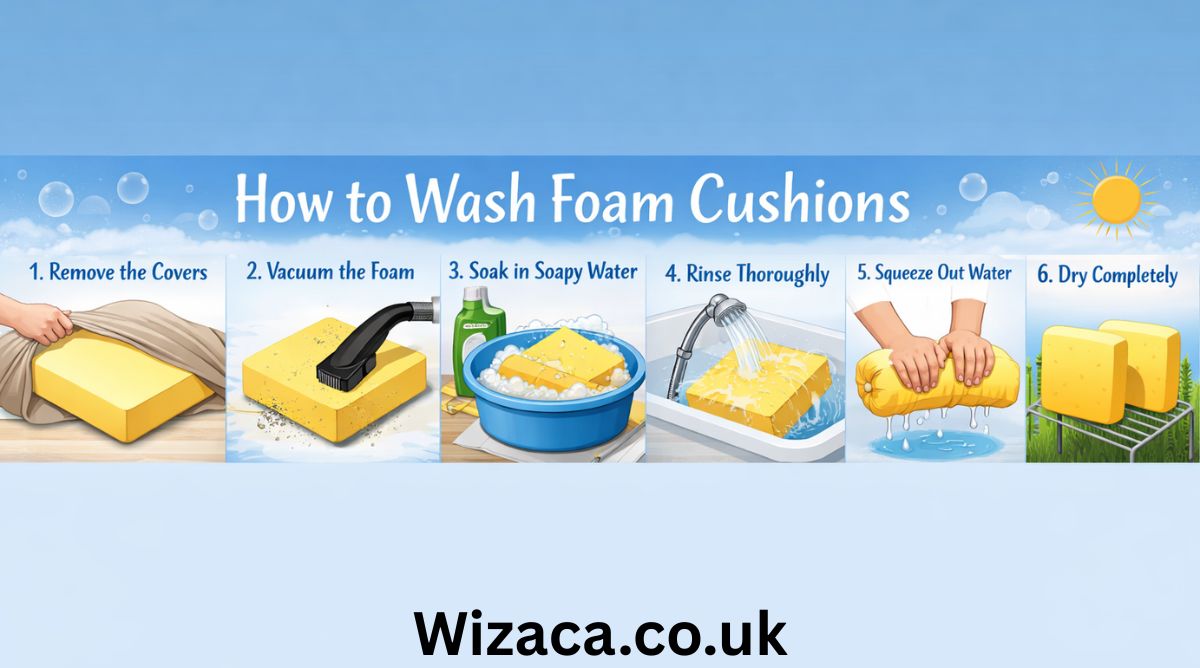
Proper preparation ensures better cleaning results and prevents damage. Start by removing the cushion covers if they are removable. Most covers can be machine washed separately according to fabric instructions. Never wash foam inserts in a washing machine unless specifically stated by the manufacturer, as the agitation can tear or distort the foam.
Take the foam cushions outdoors or to a well-ventilated area. Gather mild detergent, warm water, a spray bottle, soft cloths, a sponge, and a vacuum cleaner with an upholstery attachment. Avoid harsh chemicals, bleach, or strong solvents because they can break down foam structure.
If there are large debris particles, use a vacuum cleaner to remove dust, crumbs, and pet hair before applying any moisture.
How to Spot Clean Foam Cushions
Spot cleaning is the safest and most recommended method for most foam cushions. This method targets stains without soaking the entire cushion.
Mix a small amount of mild liquid detergent with warm water in a bowl. Dip a clean sponge or cloth into the solution and gently blot the stained area. Avoid scrubbing aggressively because it can damage the foam’s surface and push stains deeper.
Continue blotting until the stain begins to lift. Then use a clean damp cloth with plain water to remove soap residue. Press gently with a dry towel to absorb excess moisture. Allow the cushion to air dry completely in a well-ventilated area before placing it back in its cover.
How to Deep Wash Foam Cushions
If the cushion is heavily soiled or has absorbed odors, a deeper cleaning may be necessary. Fill a bathtub or large basin with lukewarm water and add a small amount of mild detergent. Submerge the foam cushion and gently squeeze it to allow the soapy water to penetrate. Do not twist or wring the foam, as this can tear it.
After soaking for about 10 to 15 minutes, drain the soapy water and refill the tub with clean water. Gently squeeze the cushion repeatedly to rinse out the detergent. Continue rinsing until no soap bubbles remain.
To remove excess water, press down on the cushion firmly with both hands. Do not wring it. Place the cushion on a flat surface and press with towels to absorb as much water as possible.
Drying Foam Cushions Properly
Drying is the most critical step when learning how to wash foam cushions. Foam retains water deeply, and improper drying can lead to mold growth. Always air dry foam cushions in a well-ventilated area. Placing them outside in the shade on a warm day is ideal. Avoid direct sunlight for extended periods because UV rays can weaken foam material.
Stand the cushion upright to allow air circulation on all sides. You may use fans to speed up drying. Depending on the thickness and humidity level, drying may take 24 to 48 hours. Ensure the cushion is completely dry before placing it back into its cover.
Never use a dryer or high heat source, as heat can shrink or damage foam.
Removing Odors from Foam Cushions
Odors often develop due to trapped moisture, sweat, or spills. Baking soda is an effective natural deodorizer. Sprinkle a generous amount of baking soda over the entire surface of the foam cushion and let it sit for several hours or overnight. Then vacuum thoroughly to remove the powder.
For stronger odors, you may use a mixture of white vinegar and water in a spray bottle. Lightly mist the cushion without soaking it. Vinegar helps neutralize bacteria and smells. Allow the cushion to air dry completely.
Cleaning Mold or Mildew from Foam Cushions
Mold can form if foam cushions remain damp for extended periods. If you notice black, green, or gray spots accompanied by a musty smell, act quickly.
Take the cushion outdoors to prevent spreading spores indoors. Brush off visible mold gently using a soft brush. Mix equal parts of water and white vinegar and lightly apply it to the affected area. Let it sit for about 15 minutes before blotting with a clean cloth. Avoid soaking the foam.
Dry the cushion thoroughly in direct airflow. If mold growth is severe and deeply embedded, replacing the foam may be safer for health reasons.
Washing Outdoor Foam Cushions
Outdoor cushions are exposed to rain, dust, pollen, and sun. Many outdoor cushions are made with quick-dry foam that allows water to pass through more easily. Even so, proper cleaning is essential.
Remove covers and wash them separately. Rinse the foam cushion with a garden hose to remove loose dirt. Use mild soap and a sponge to clean surface stains. Rinse thoroughly and stand upright to dry in an airy, sunny area. Outdoor foam typically dries faster than indoor foam.
Regular cleaning during outdoor seasons helps prevent mildew buildup.
Mistakes to Avoid When Washing Foam Cushions
One common mistake is putting foam cushions in a washing machine. The agitation cycle can tear the foam apart. Another mistake is using hot water or strong chemicals, which degrade foam structure. Twisting or wringing foam to remove water can cause permanent deformation.
Skipping proper drying is also dangerous. Even if the surface feels dry, internal moisture may remain. Always allow extra drying time to ensure full dryness.
Maintenance Tips to Keep Foam Cushions Clean Longer
Prevention reduces the need for frequent deep washing. Use washable covers whenever possible. Vacuum cushions weekly to remove dust and debris. Address spills immediately before they soak in. Rotate cushions regularly to distribute wear evenly.
For homes with pets or children, consider using waterproof liners under fabric covers. Store outdoor cushions in a dry place during rainy seasons. Proper storage prevents moisture accumulation.
How Often Should You Wash Foam Cushions
The frequency of washing depends on usage. Indoor sofa cushions may need deep cleaning once or twice a year, while outdoor cushions may require seasonal washing. Spot cleaning should be done immediately after spills. Regular vacuuming should be part of weekly cleaning routines.
If someone in the household suffers from allergies, more frequent cleaning may help reduce dust mites and allergens.
Special Care for Memory Foam Cushions
Memory foam requires extra caution because it is denser and absorbs water more slowly. Avoid full submersion whenever possible. Spot cleaning is strongly recommended. If deep cleaning is necessary, use minimal water and ensure extended drying time.
Memory foam can lose its supportive structure if handled roughly. Always press gently instead of squeezing aggressively.
Final Thoughts on How to Wash Foam Cushions
Learning how to wash foam cushions correctly can significantly extend their lifespan and maintain a fresh, hygienic environment in your home. The key principles include using mild cleaning solutions, avoiding excessive water, never using harsh chemicals, and ensuring complete drying before reuse. Whether you are dealing with light stains, heavy dirt, or unpleasant odors, applying the proper cleaning techniques will help keep your foam cushions comfortable and long-lasting.
By following the correct methods and avoiding common mistakes, you can preserve the quality, shape, and durability of your cushions for years to come. Regular maintenance combined with proper washing techniques ensures that your seating remains clean, supportive, and inviting in every season.